

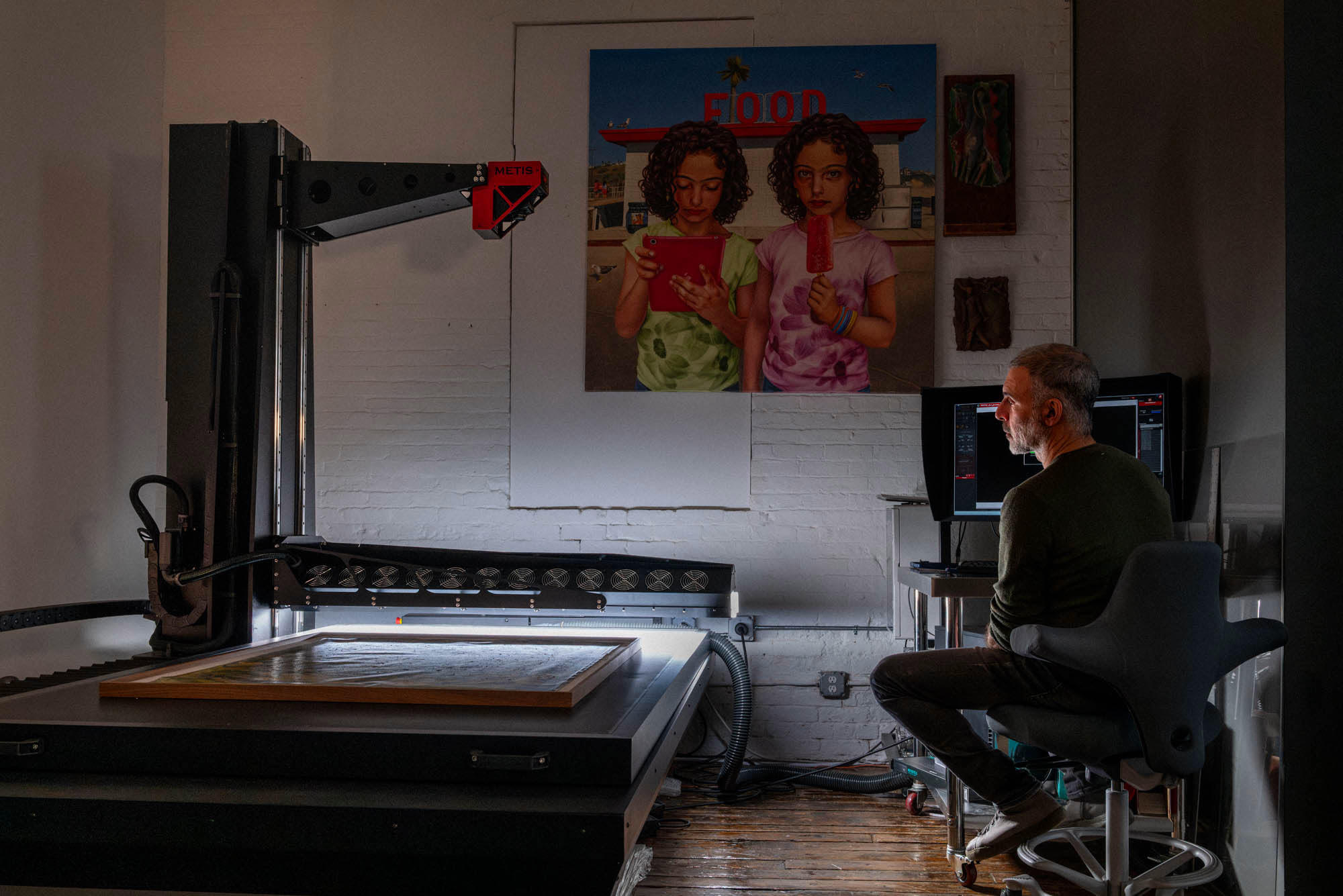
Fine Art Scanning
Museum-Quality Artwork Digitization
Brooklyn Editions offers professional fine art scanning for artists, galleries, collectors, estates, businesses, and institutions across New York City and beyond. Our studio produces precise, high‑resolution, color-accurate digital captures from original artwork — files built for archival documentation, publication, and museum-quality reproduction.
Powered by the Metis DRS 2020 — one of the most advanced artwork digitization systems used in fine art and cultural heritage imaging — we can capture artwork contact-free in a single pass at resolutions that reveal every nuance of the original. Whether you're creating editions from a large oil painting, archiving a body of mixed media work, or producing giclée prints that need to match the original exactly, our scanning service delivers the color accuracy, surface detail, and file quality to make it possible.
What We Scan
Paintings
Oil, acrylic, encaustic, oil stick on canvas, panel or board, including large-scale and unstretched works

Works on paper
Watercolor, gouache, ink, charcoal, pastel, and pencil in any scale

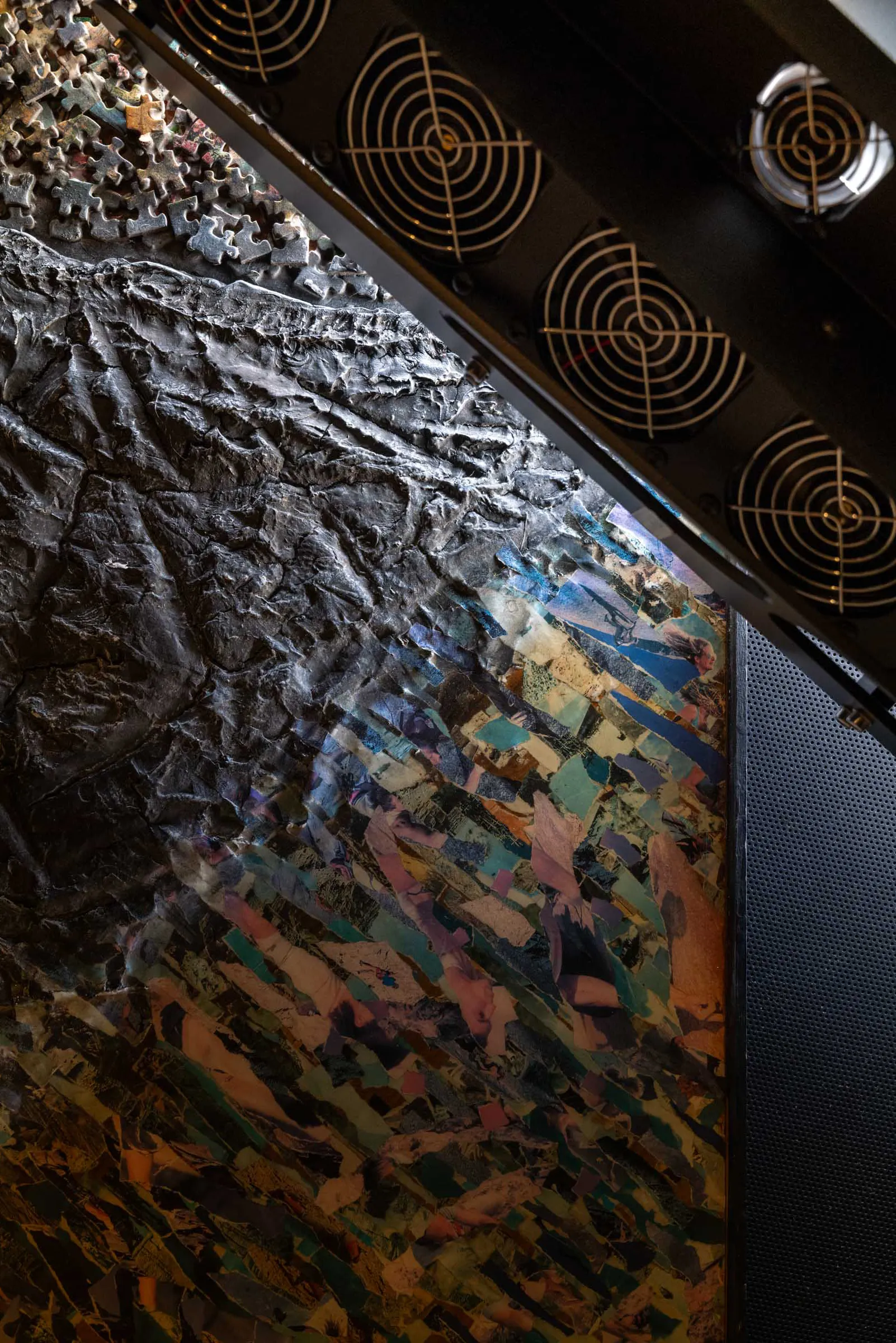
Mixed media and collage
Including raised, layered, and heavily textured surfaces
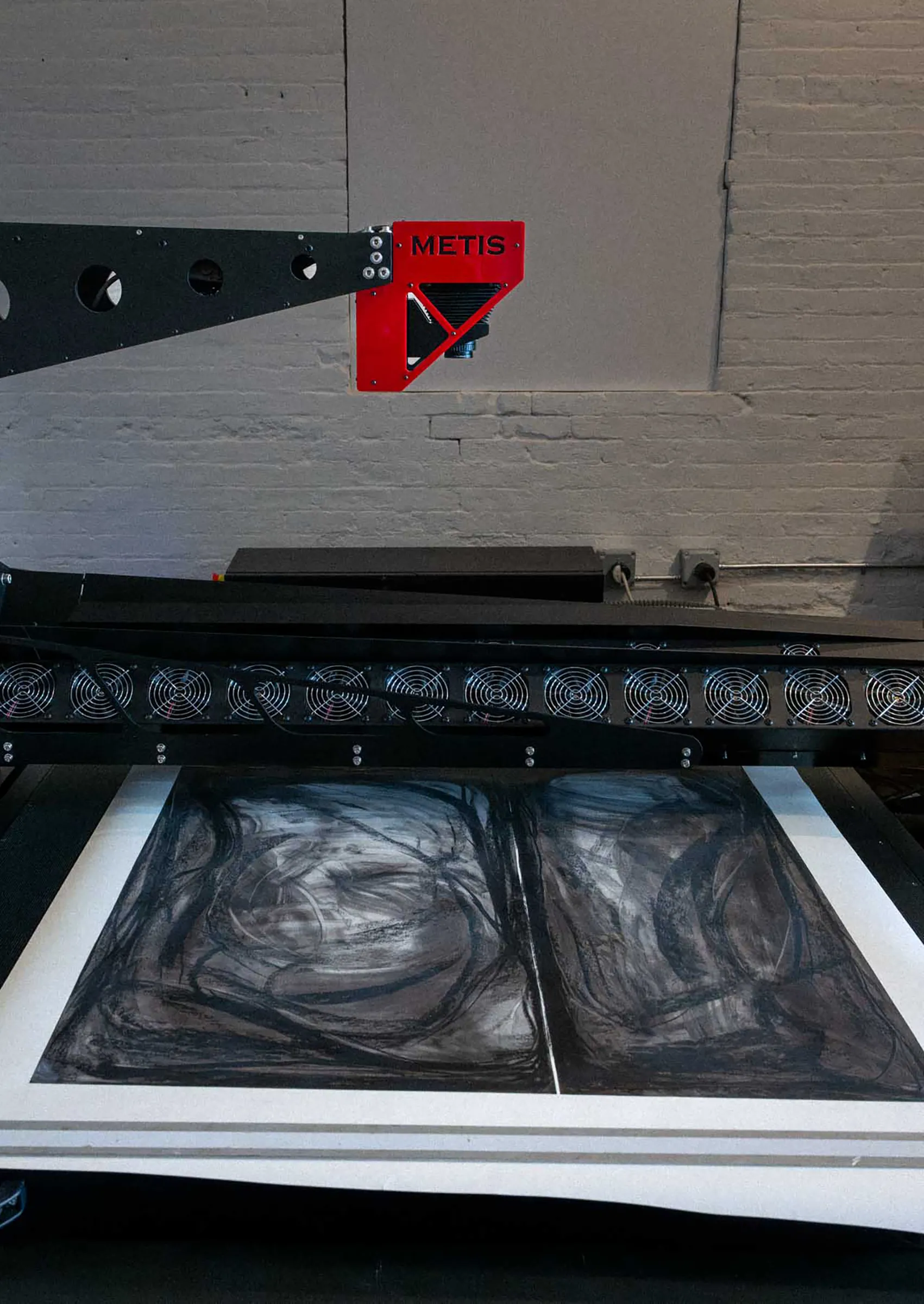
Drawings and Illustrations
At any size, from intimate works to full-sheet compositions
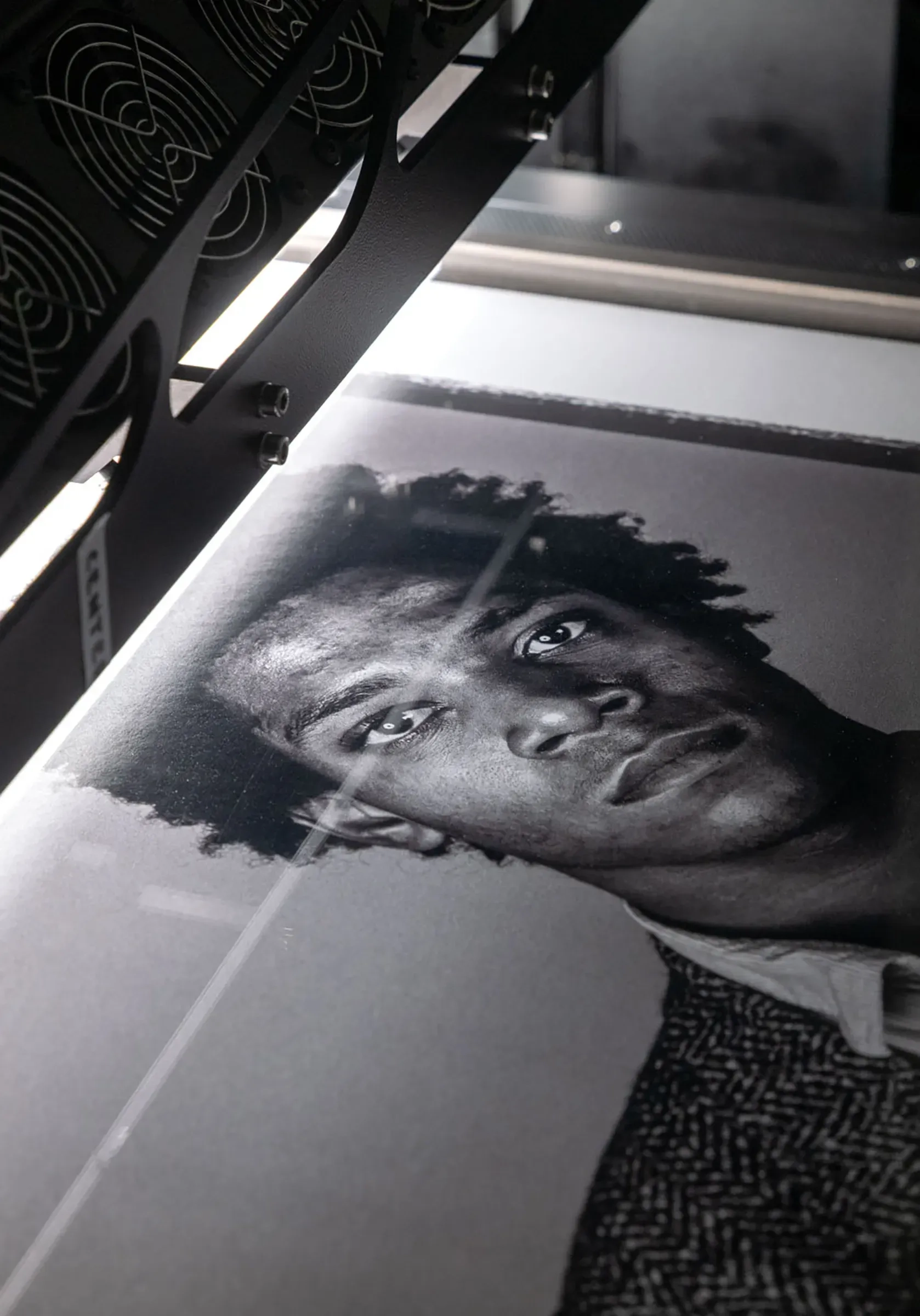
Photographs and photographic prints
Archival, vintage, and contemporary
Textiles, tapestries, and fabric works
Including embroidered, woven, and stitched surfaces

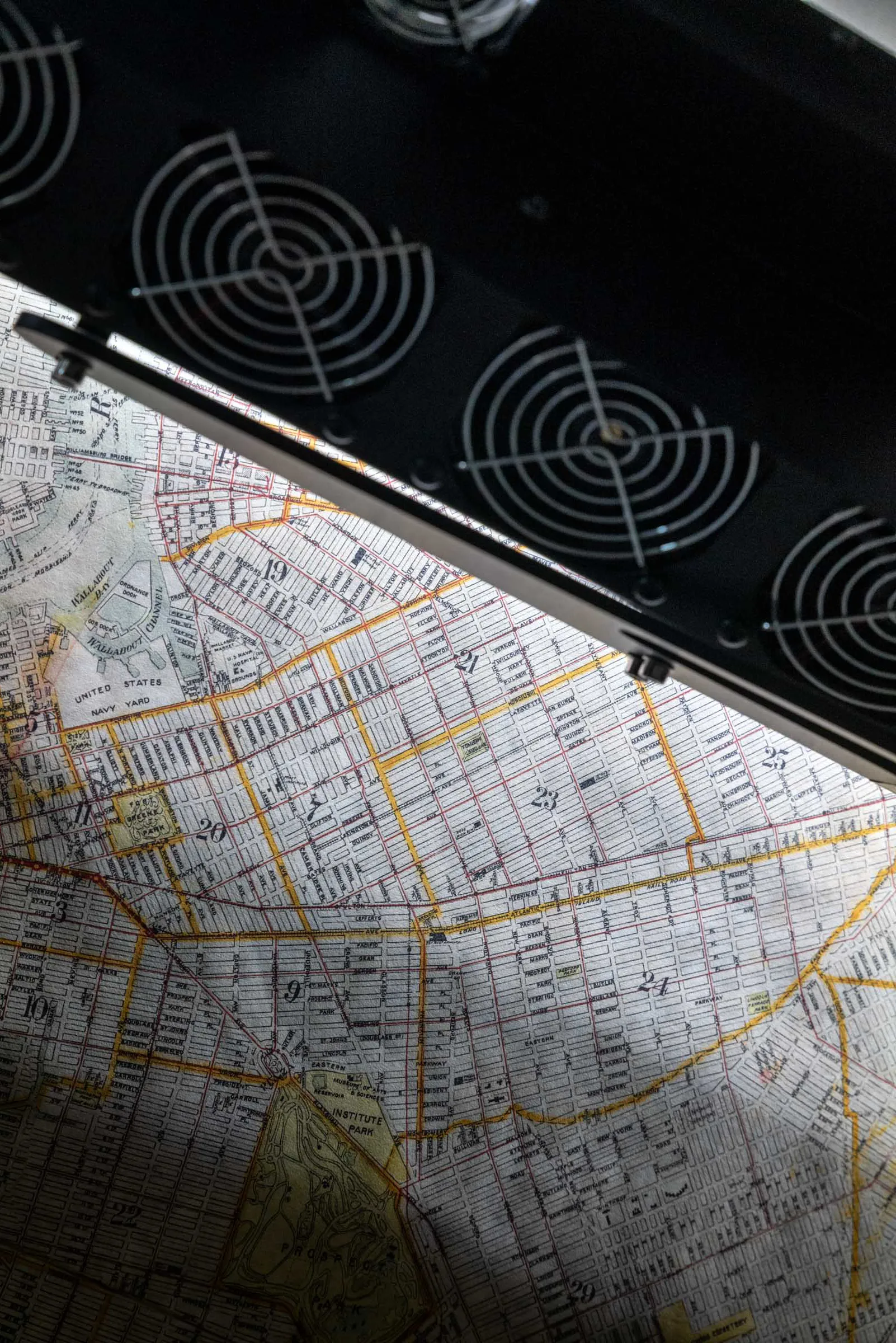
Maps and historical documents
Fragile, oversized, or deteriorating originals handled with care
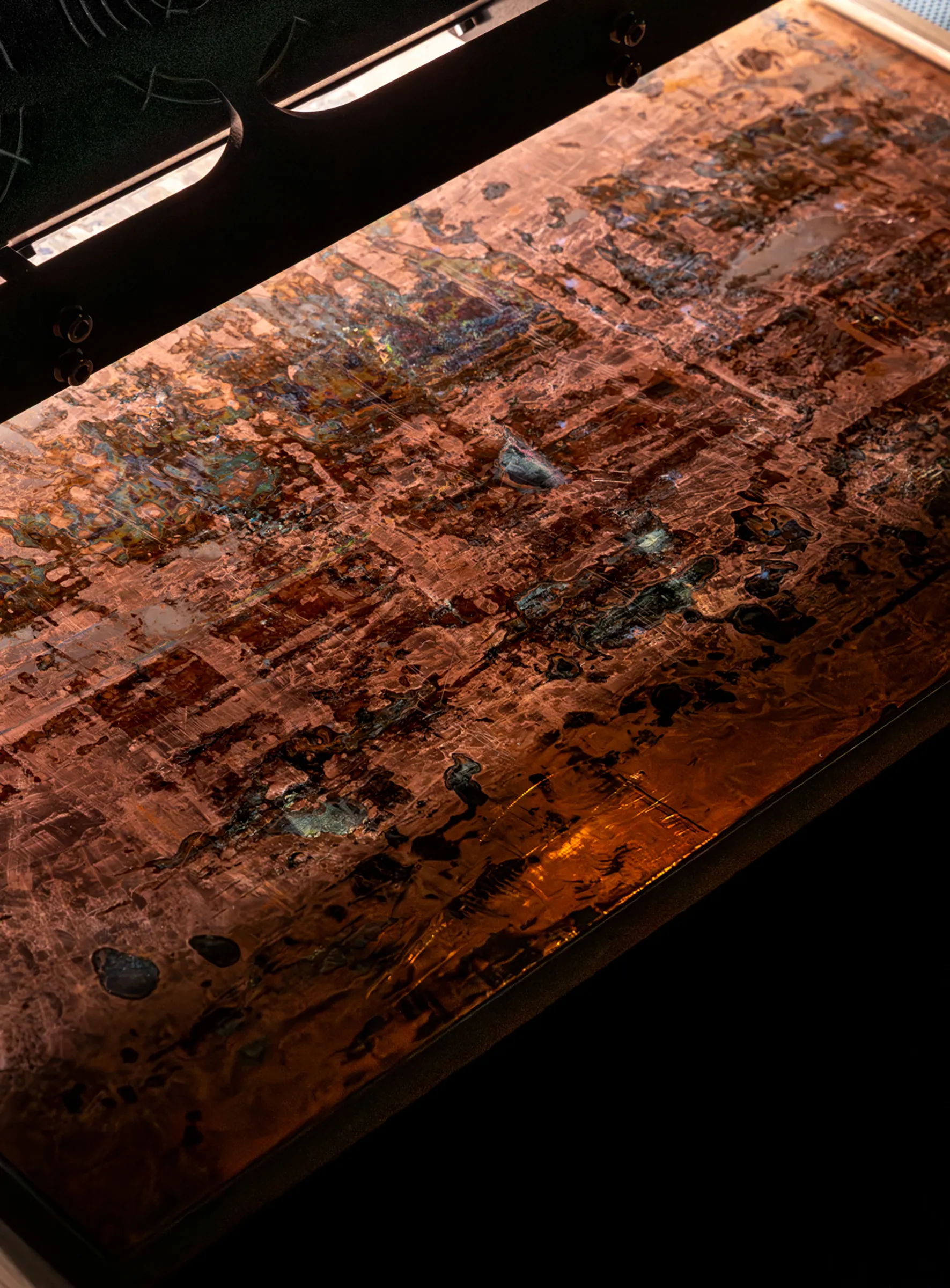
Natural and industrial surfaces
Wood, stone, tile, brick, metal, plaster, and concrete for archival or PBR applications
Oversized and mural-scale works
Captured via precision multi-pass stitching with no visible seams
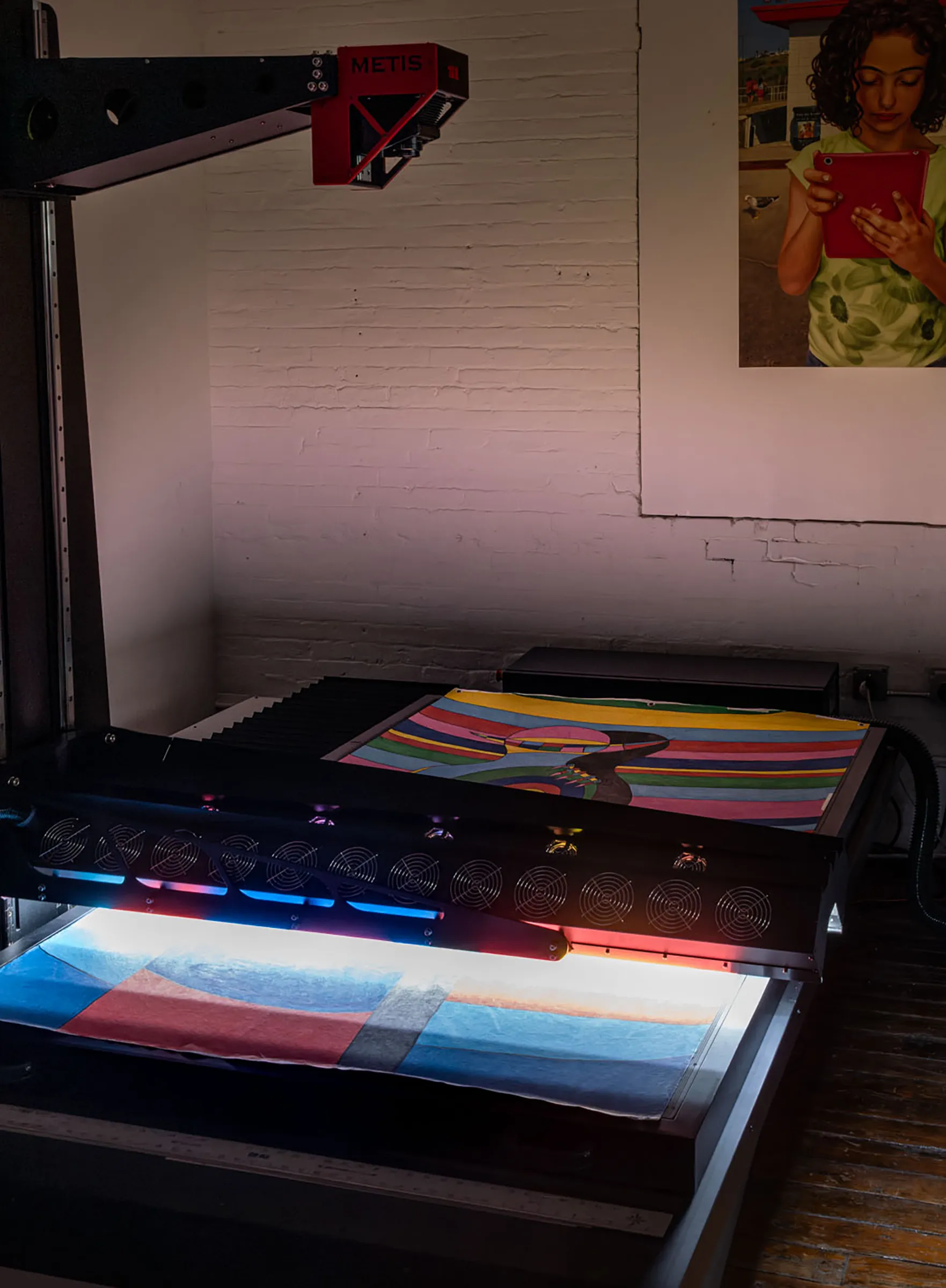
Powered by the Metis DRS 2020
Most fine art digitization services work with flatbed scanners designed for documents and photographic prints, or camera-based capture systems. Each of these approaches have significant limitations: constrained scan beds, fixed lighting, limited resolution, and an inability to capture the physical and textural reality of a painting or complex surface.
Brooklyn Editions provides a fundamentally different class of instrument. The Metis DRS 2020 is a large-format scanner built specifically for demanding fine art and cultural heritage applications. It brings capabilities to our studio that are typically only found at major museums, national archives, and dedicated conservation facilities.

METIS DRS 2020 KEY FEATURES

CONTACT- FREE, SINGLE PASS CAPTURE 4’ X 8’ SCAN BED WITH UNLIMITED STITCHING POTENTIAL
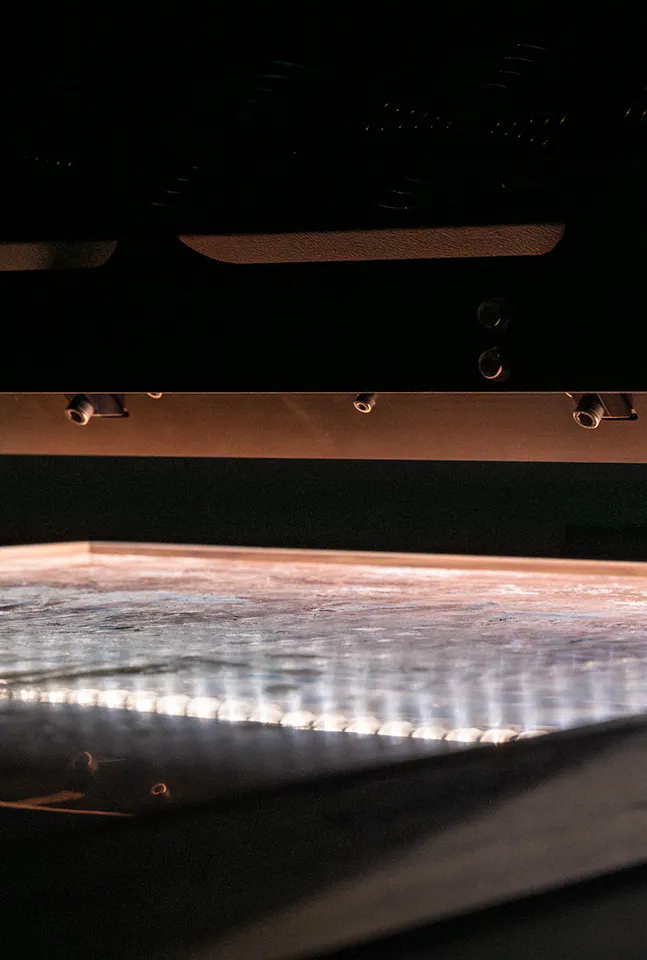
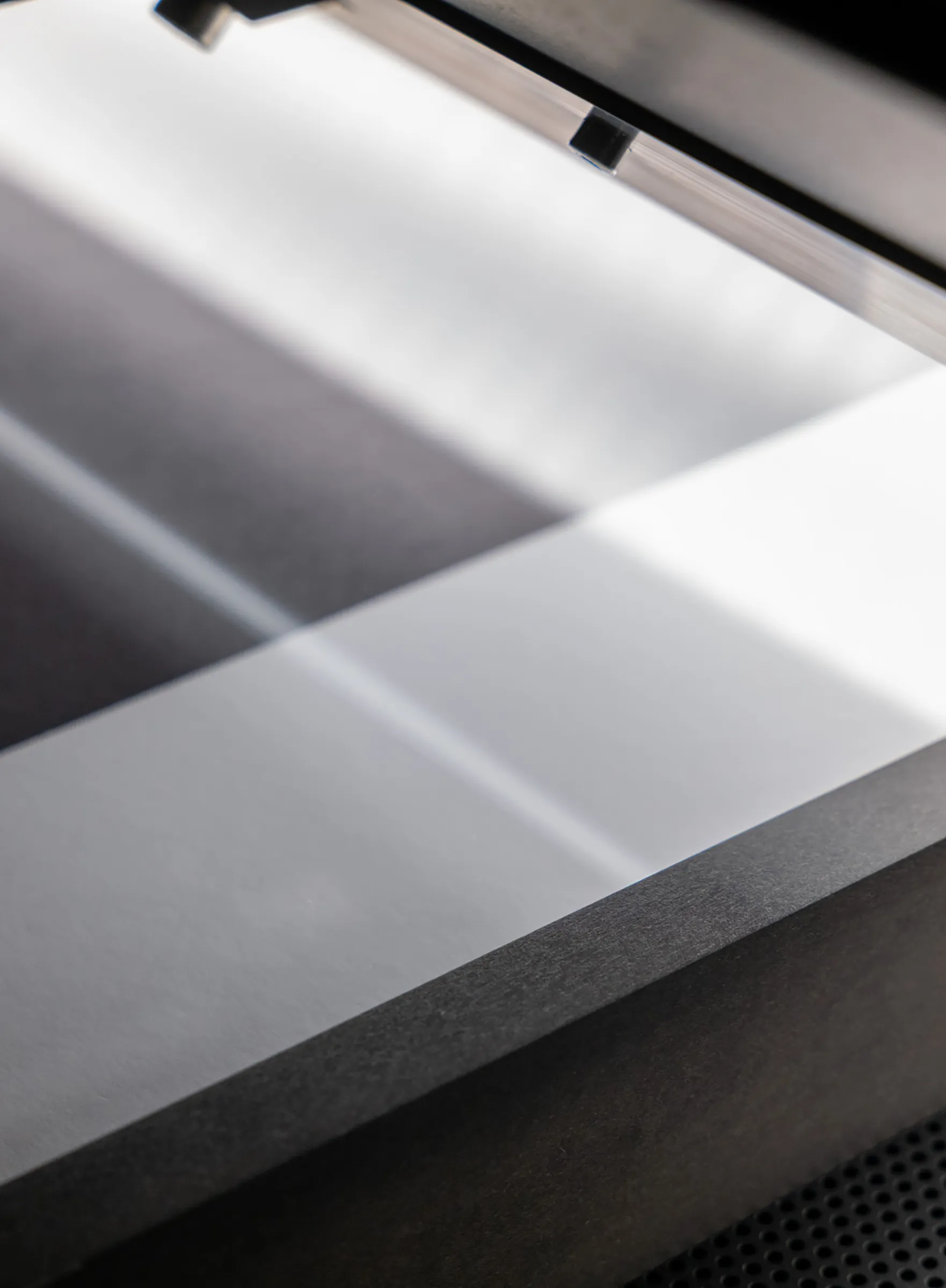
ELIMINATES HANDLING RISK AND DEFRAMING
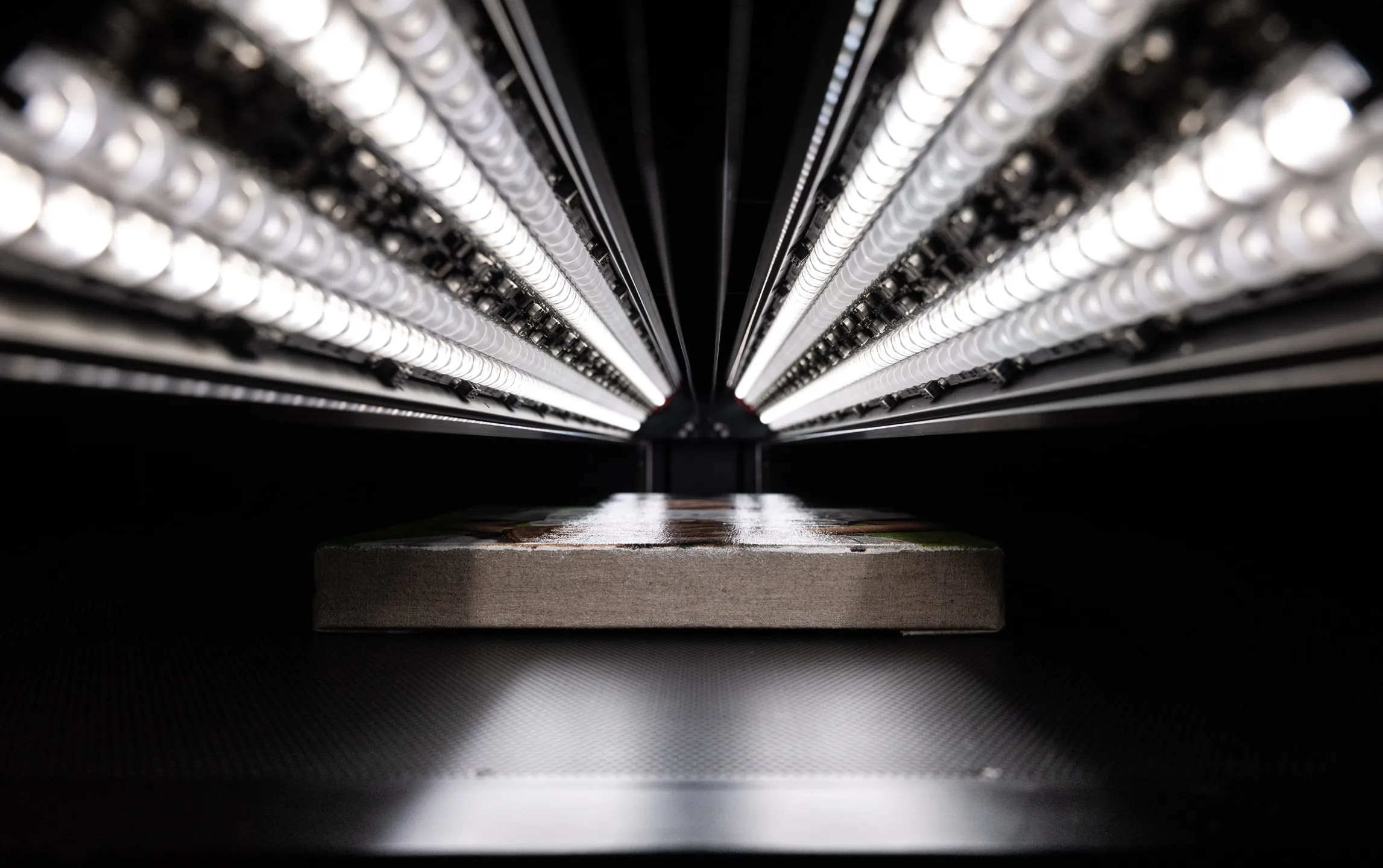
SAFE FOR VULNERABLE AND LIGHT-SENSITIVE WORKS
UV-FREE AND INFARED-FREE
DC SYNCHROLIGHT LIGHTING SYSTEM
8 INDEPENDENTLY CONTROLLED LED LIGHT SOURCES

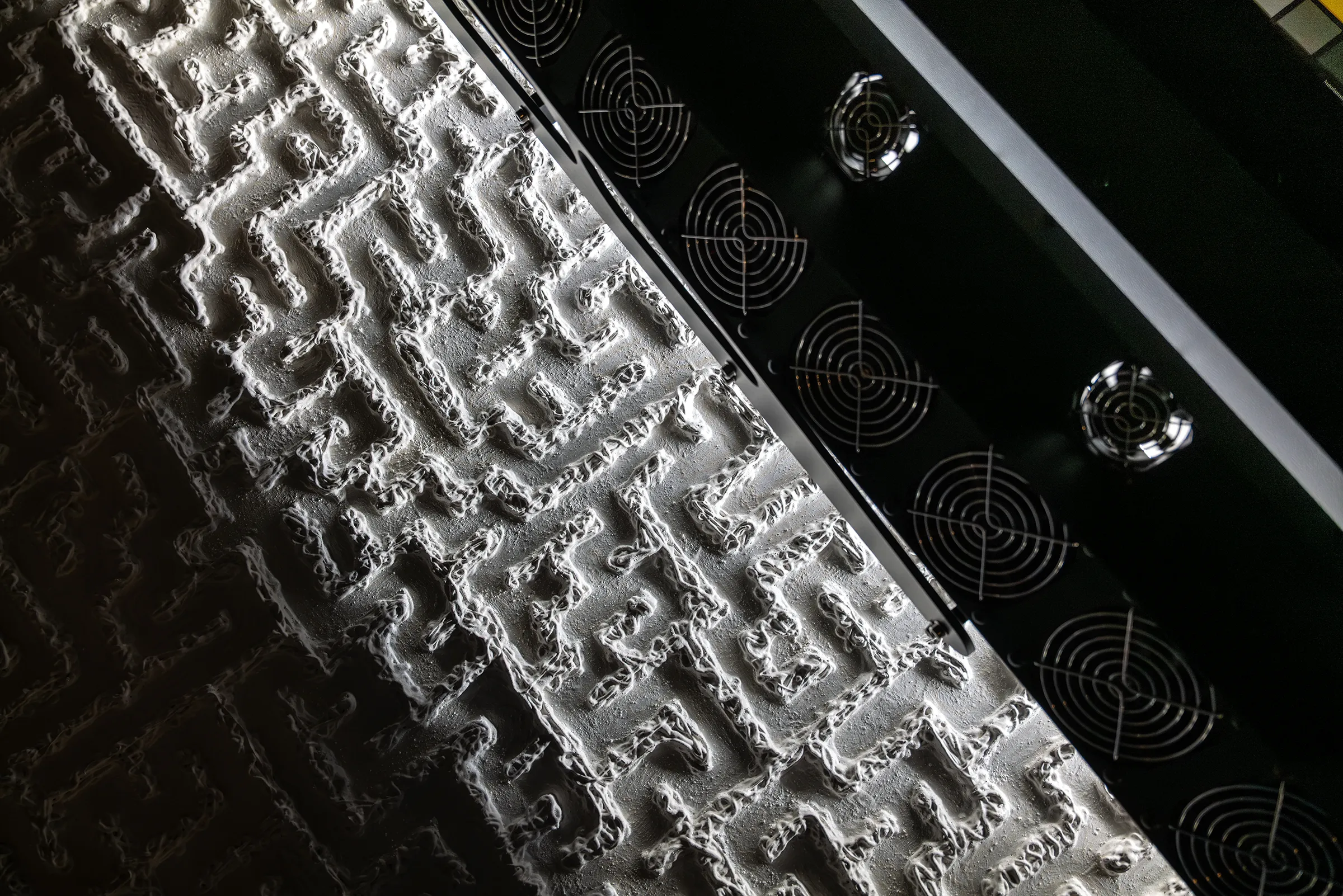
16K CMOS TRILINEAR IMAGE SENSOR
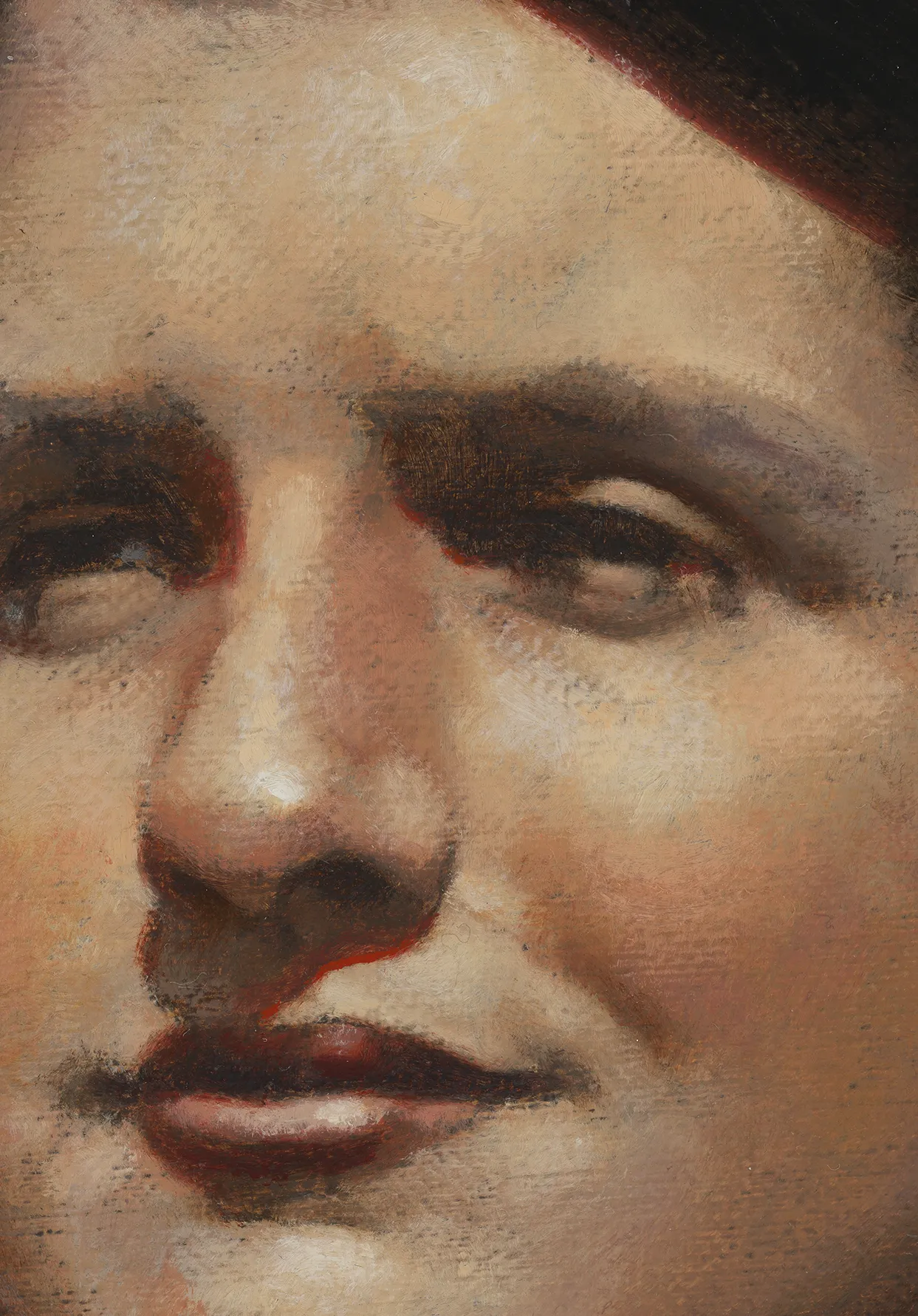
SOFTWARE-ADJUSTABLE RESOLUTION 100-3200 PPI
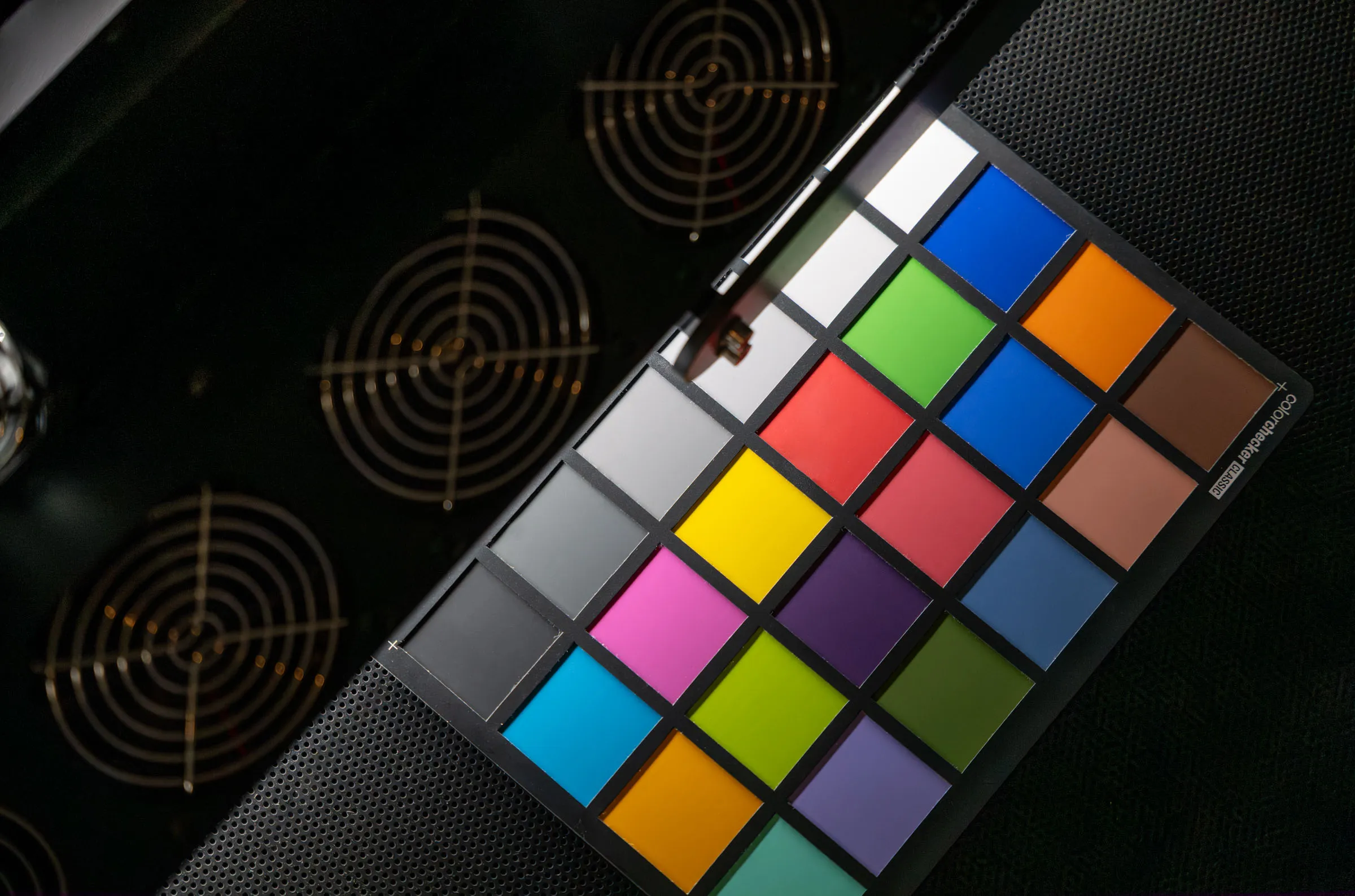
ICC-MANAGED COLOR ACCURACY
PRESERVES THE FULL DYNAMIC RANGE OF THE WORK
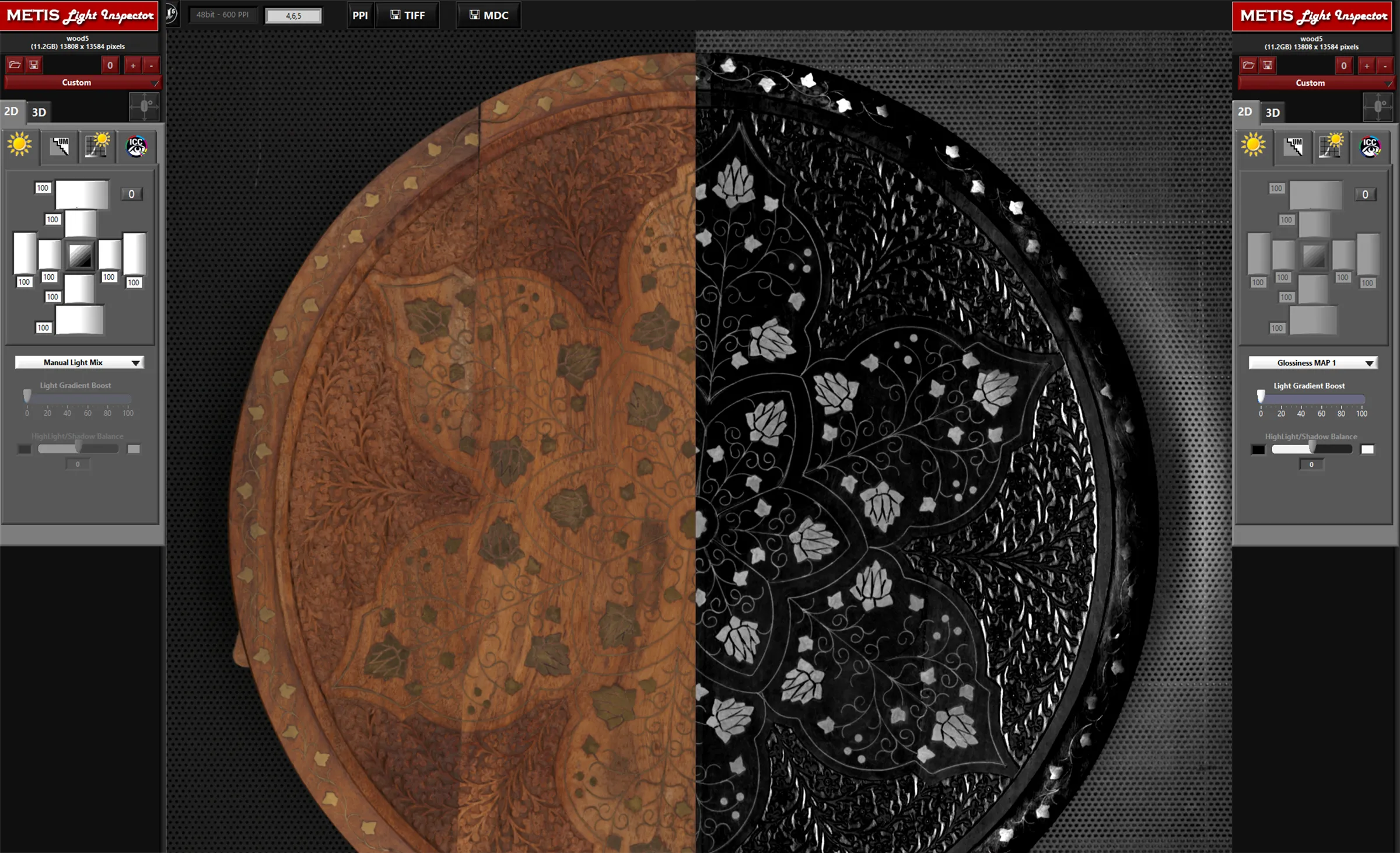
PHOTOMETRIC STEREO DEPTH MAPPING
3D SURFACE DATA FOR DIMENSIONAL REPRODUCTION
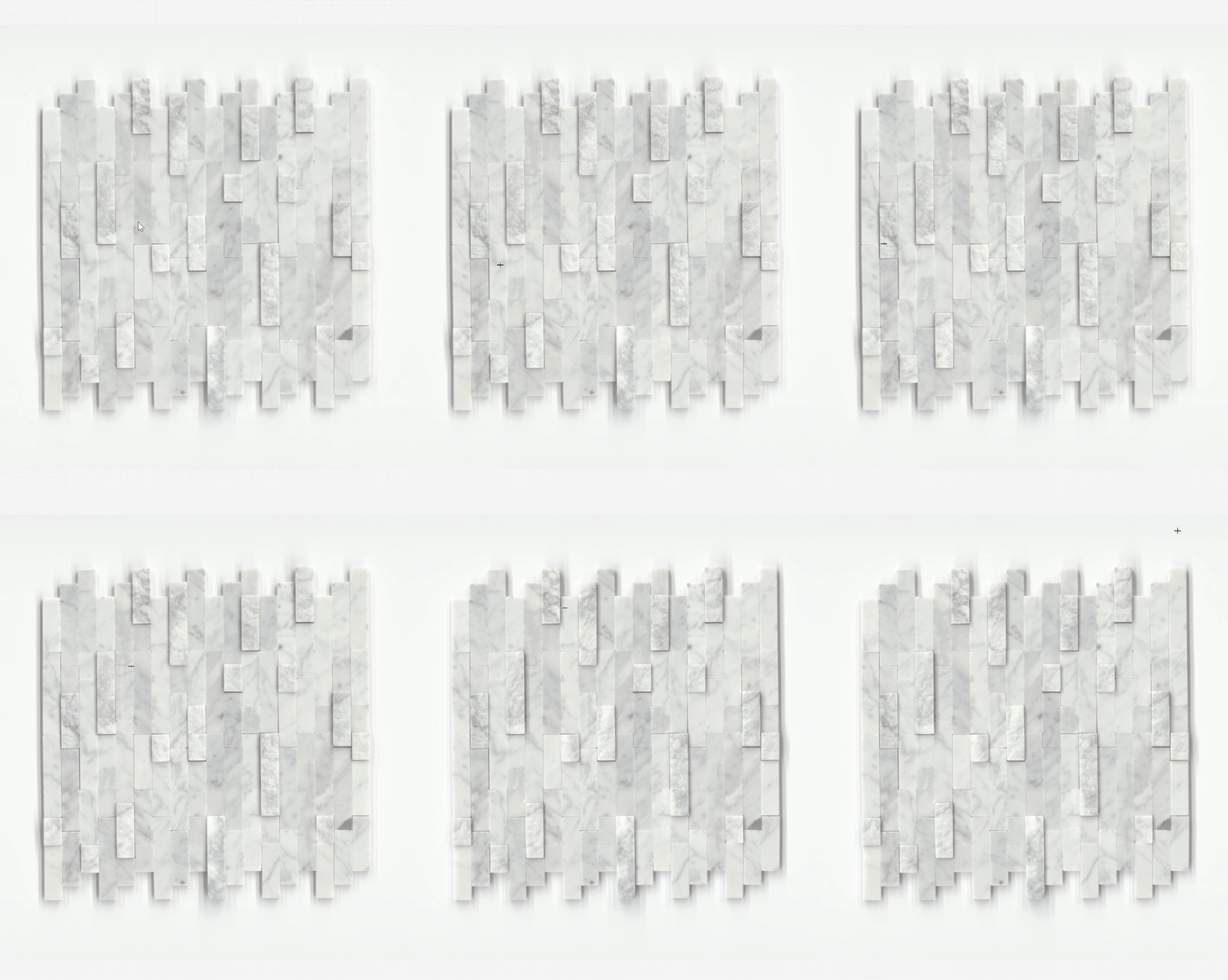

DIRECT PIPELINE FOR DECOR, DIGITAL, GAMING, AND VISUALIZATION APPLICATIONS
Contact us to learn more about our Metis DRS 2020 scanner
Send us an inquiryFrom Scan to Print — A Complete Brooklyn Studio
For most clients, scanning is the beginning of a larger project. Brooklyn Editions is a full-service fine art print studio — we can take your scan directly into giclée printing, image editing, edition production, and artist fulfillment without any file handoffs or outside vendors.
We bring the same critical eye to color-matching a print to your original as we bring to the scan itself. Having both services under one roof, managed by the same team of artist-printers, means consistency and control at every stage — from the first pass of the scanner to the final print.
Serving New York and Beyond
Our scanning studio in Brooklyn serves artists, collectors, galleries, and institutions throughout New York City, across the broader East Coast, and even beyond.
We regularly work with clients who require museum-quality artwork digitization for private collections, institutional archives, and edition production projects. Remote clients can arrange shipping through art handlers or padded masterpack — contact us for details.
What You Receive
Every scan from Brooklyn Editions is delivered as a finished, print-ready file — not raw data that requires further work on your end. We review every file for color accuracy, clean dust and minor surface artifacts, and match the digital file to the original artwork under calibrated viewing conditions.
Standard delivery includes:
- ‣ Full-resolution TIFF file, 24–48-bit (8–16-bit per channel) RGB
- ‣ Color-corrected and matched to the original under calibrated conditions
- ‣ Light cleanup of dust, debris, and minor surface artifacts
- ‣ Wide-gamut RGB working space for maximum print compatibility
- ‣ Files suitable for giclée printing, digital archiving, and edition production
- ‣ Secure digital delivery or in-person handoff at our Brooklyn studio
Files can also be converted to CMYK for commercial printing and proofing, or optimized for web and digital distribution, upon request.
THE SCANNING PROCESS
Every scanning project begins with a consultation — in person at our Brooklyn studio or remotely.
We review the artwork, discuss its dimensions, surface characteristics, and the intended use of the files. If your work involves challenging materials (metallic pigments, heavy varnish, unstretched canvas, fragile or deteriorating surfaces), we address these in advance so there are no surprises.
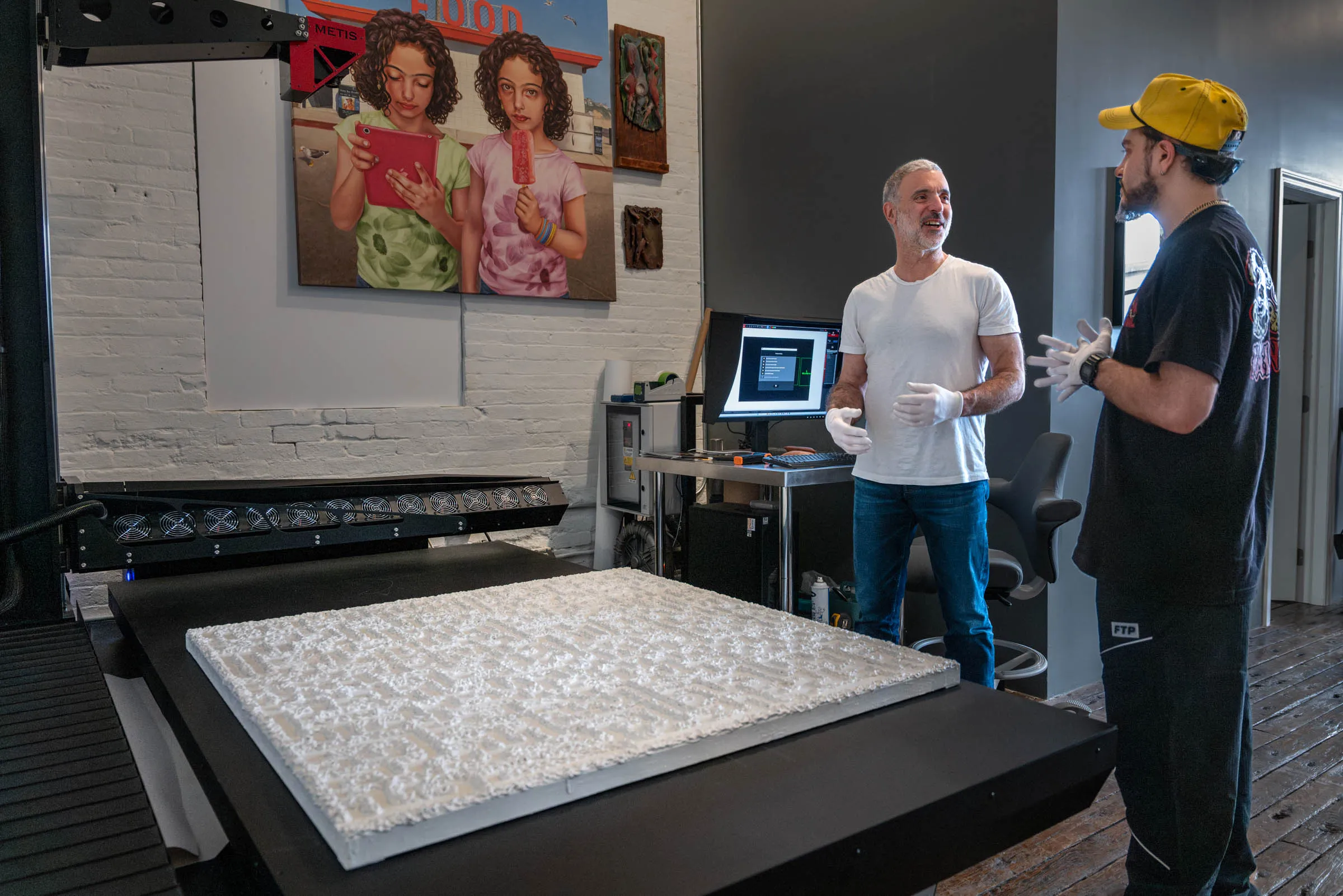
All original artwork is handled with the highest level of care by our team of working artists and experienced printers. We understand that maintaining the condition of an irreplaceable original is as important as the quality of the scan itself.
We recommend that works be dry before bringing them in. Charcoal, graphite, and pastel works should be fixed prior to arrival. For most scanning, works should be unframed — though framed works can be scanned through glass when deframing is not practical.
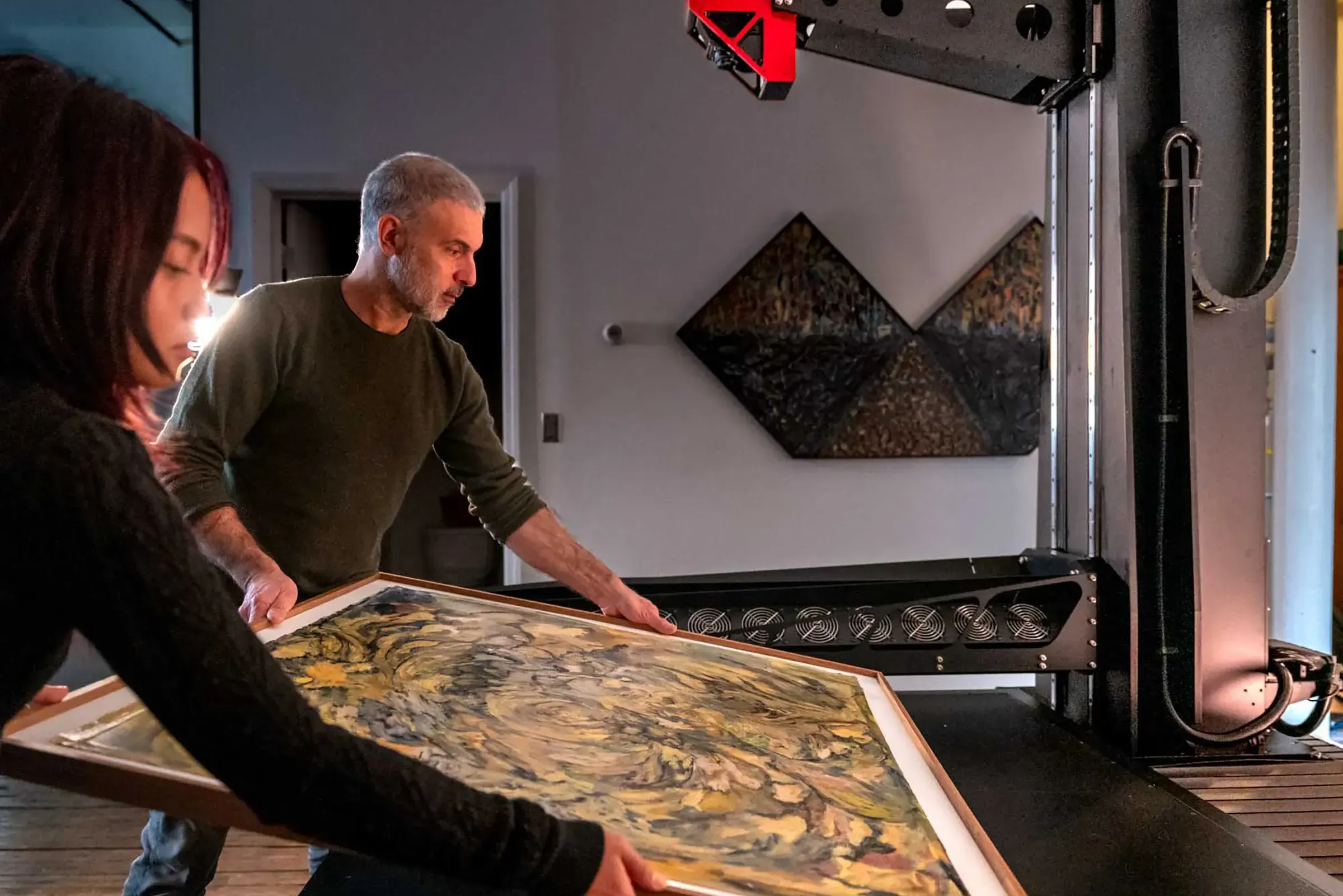
Artwork is placed on our Metis DRS 2020 scanning table, where our team selects the optimal lighting configuration for the specific surface — adjusting for texture, reflectivity, and tonal range. All scanning is contactless. For large or multi-section works, passes are merged automatically into a single seamless file.
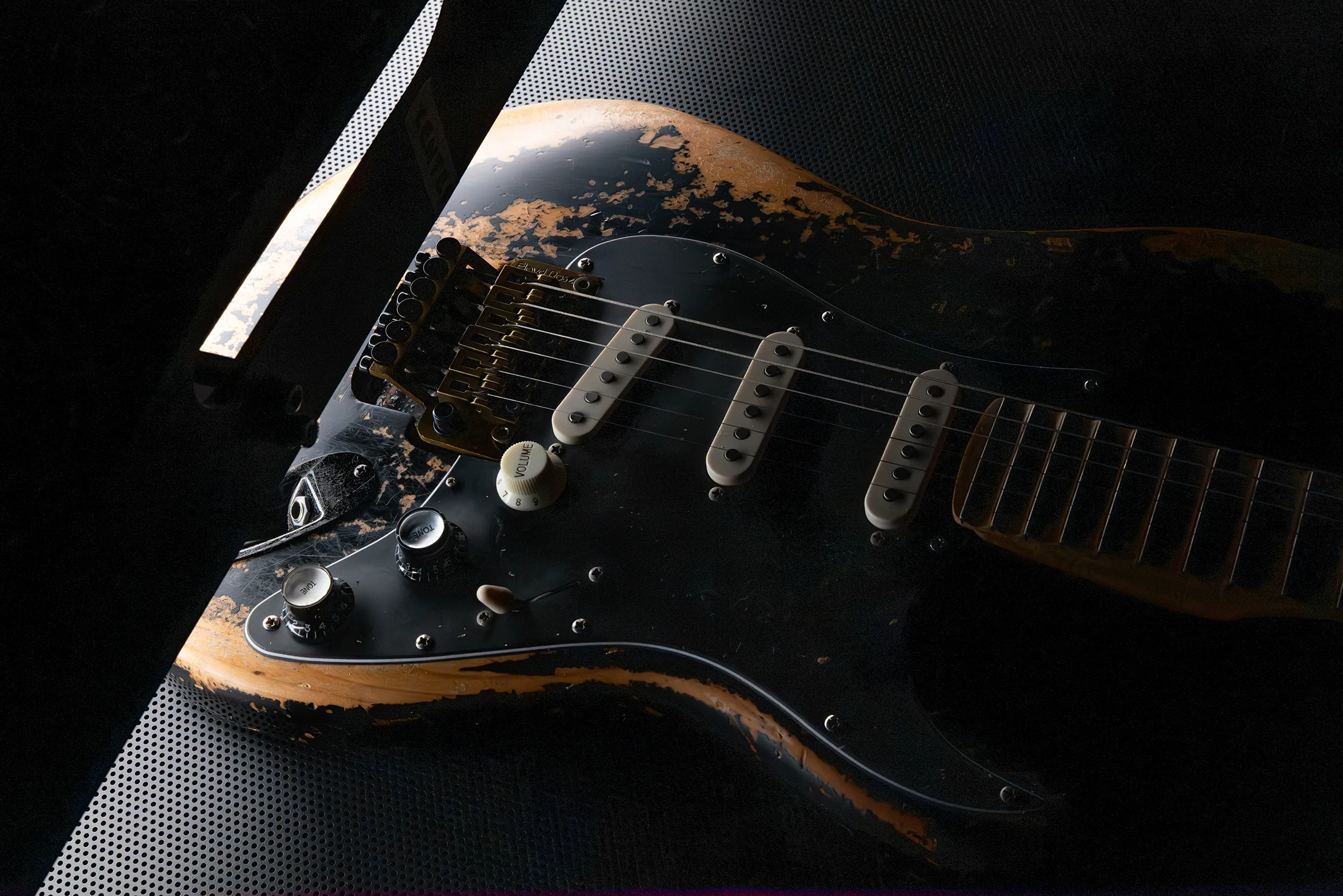
Before final delivery, you'll receive a preview file to review and approve. Once signed off, full-resolution files are delivered via secure digital download or handed off directly at our studio. All open invoices must be settled before files or artwork are released.
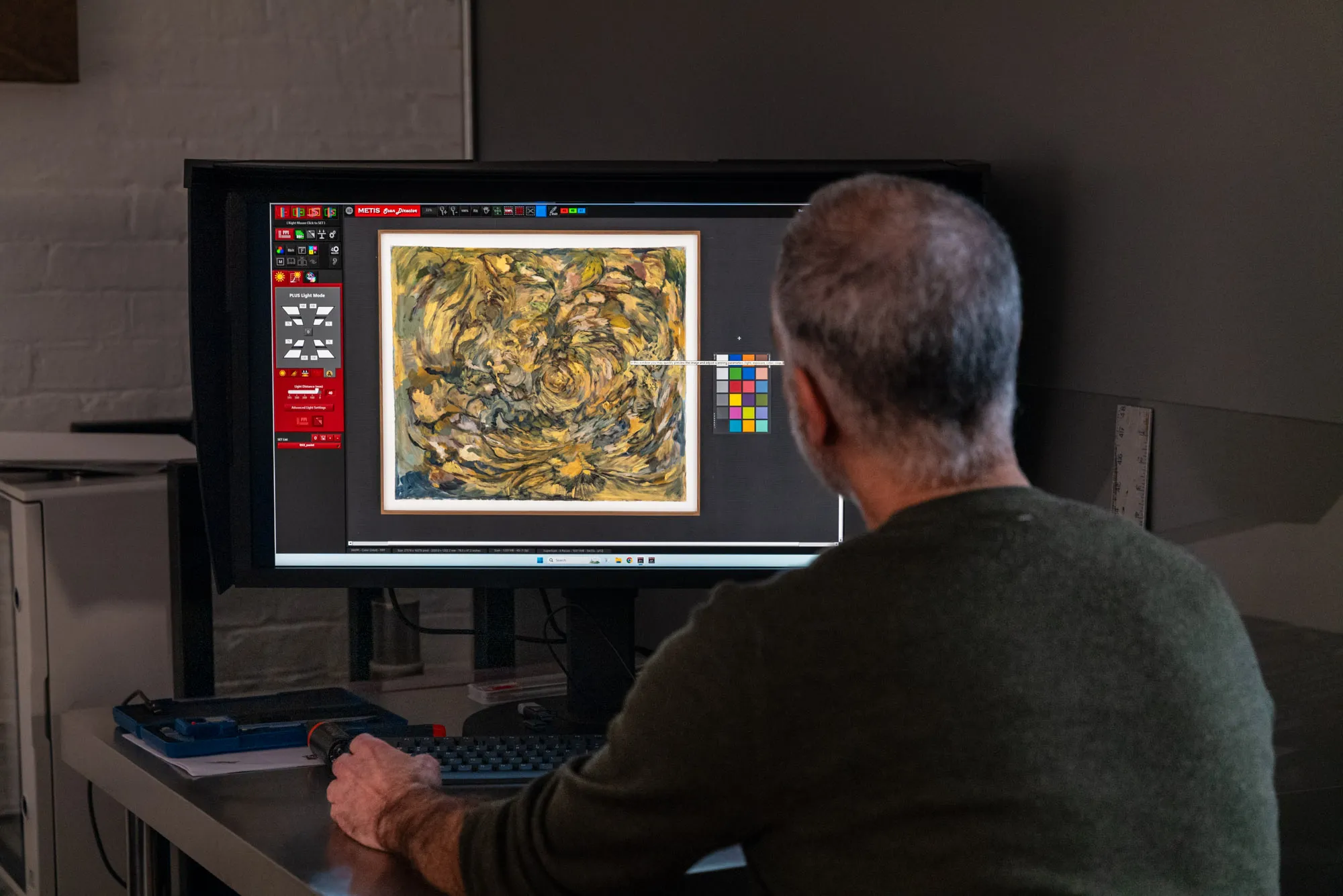
Most scanning projects are completed within 1–3 business days. Rush and same-day service can often be arranged for time-sensitive projects — please let us know of any deadlines when you get in touch.
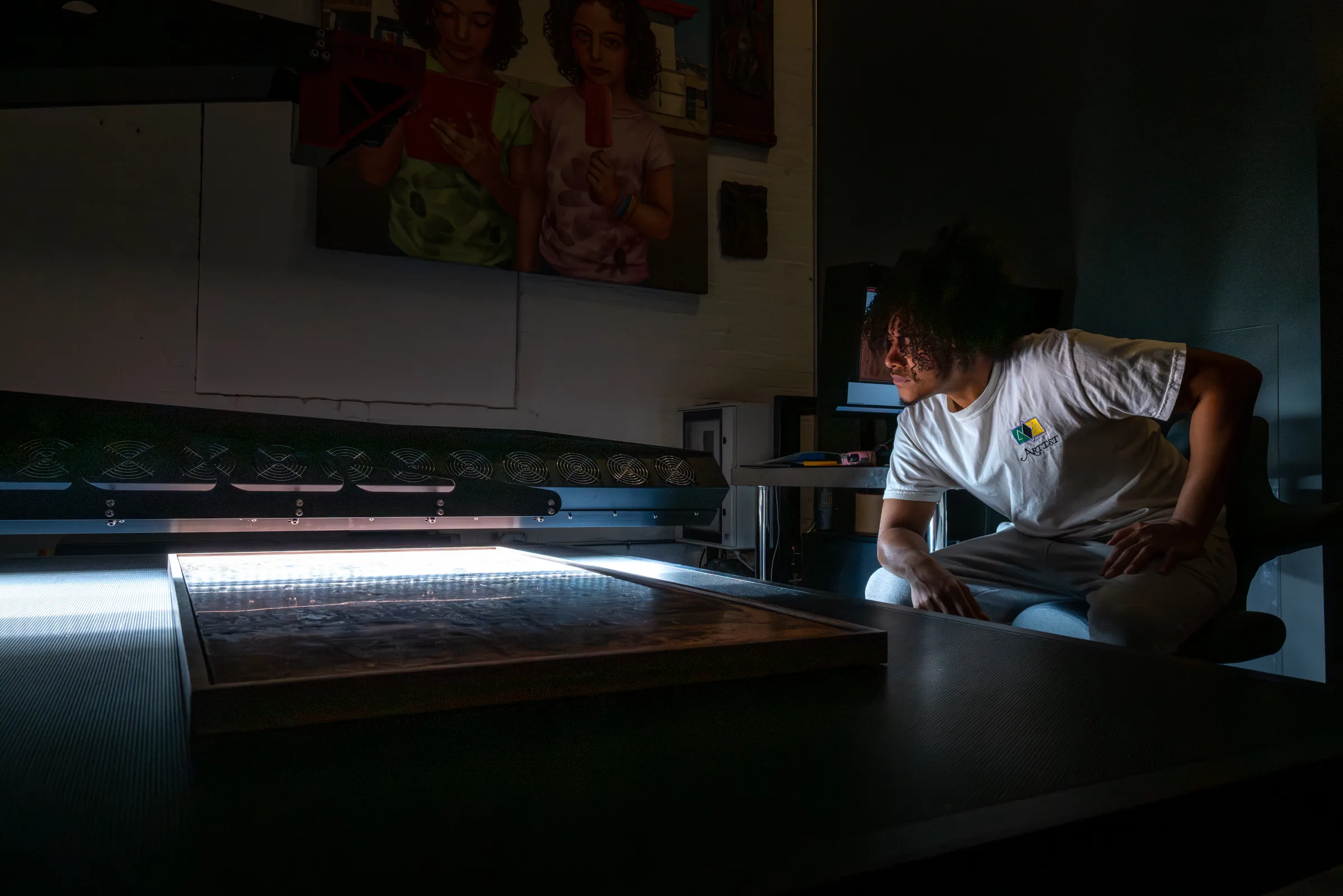
After the scanning is completed we pack the works safely in a combination of glassine, foam wrap or bubble wrap as appropriate. Custom packing for shipping and transport by art handlers can also be arranged.
PRICING & GETTING STARTED
Scanning rates are based on the physical dimensions of the artwork and the resolution and processing required.
Depth maps, 3D processing, and specialty outputs are subject to additional charges. Every project receives an individual quote after consultation.
- Contact us with details about your artwork and project goals
- We'll arrange a studio visit or remote consultation
- You'll receive a written cost estimate and timeline before any work begins
All artwork accepted for scanning is subject to our standard Limit of Liability. Brooklyn Editions does not insure artwork in our care. It is the client's responsibility to arrange appropriate coverage for the value of the work. See our Studio Policy for full details.
- — Fine Art Giclée Printing
From your scan file to exhibition-quality prints on the finest archival papers and substrates. - — Artist Editions & Fulfillment
Edition production, print-on-demand fulfillment, and archiving for professional artists. - — Photography Printing
Archival digital printing for photographic work, both for exhibition and personal collection. - — Retouching
Expert digital post-production to perfect files before printing. - — Photo Restoration
High-resolution scanning and restoration of damaged or deteriorating photographs. - — CMYK Proofing
Print-accurate proofing for publication, commercial, and editorial projects.
FREQUENTLY ASKED QUESTIONS
Our Metis DRS 2020 can capture artwork up to 47 × 79 inches in a single contactless pass. For larger works, our Scan Merge system stitches multiple passes into one seamless, perfectly registered file with no visible seams or resolution loss.
In most cases, no. The Metis DRS 2020's lighting controls allow us to scan framed artwork through glass. However, unframed works are preferred where practical, as they allow more lighting flexibility. We can advise during your consultation.
For reproduction prints at original size, we typically scan at 300-600 PPI. For prints that will be significantly enlarged, or where fine surface texture matters, we scan at higher resolutions up to 1600 PPI. We'll recommend the right resolution for your specific project during consultation.
Standard delivery is a full-resolution TIFF file in a wide-gamut RGB color space, at 24–48-bit depth. We can also deliver in other formats and color modes— JPEG, PDF, CMYK TIFF, or web-optimized files — upon request.
Most scanning projects are completed and ready for review within 1–3 business days. Rush and same-day service can often be arranged for time-sensitive projects.
Contact us with your deadline and we'll let you know what's possible.
Yes. The Metis DRS 2020 is a completely contactless scanner with UV-free and IR-free LED lighting — it poses no physical or photosensitive risk to the artwork.
Works that are fragile, fading, or actively deteriorating can be scanned safely. We recommend discussing the condition of the work during consultation so we can plan accordingly.
Yes. Works that exceed our single-pass bed size can be captured in multiple passes and automatically merged into a single seamless, full-resolution file. We have experience with large-scale canvases, panoramic photographs, and mural-scale works. Contact us with the dimensions of your work for a consultation.
We scan photographic prints and works on photographic paper on our Metis DRS 2020. For film scanning — negatives, slides, and transparencies — we work with our partner Drum Scanning NYC, who offer the highest available quality for film formats.
Yes. We accept shipped artwork and can help arrange transport through professional art handlers or with a padded masterpack for smaller works. Contact us before shipping so we can coordinate receipt and track all incoming pieces.
Unfortunately there is no commercial insurance available without appraisals of artwork. We handle works with great care as if they are our own. For high value pieces the onus is on the client to provide any needed coverage. Supervised scanning for valuable pieces can be arranged so works do not have to be left in the studio and a representative can remain present.
Professional artwork scanning uses a controlled, calibrated light source moving in precise registration across the surface of the artwork, producing a mathematically accurate, color-managed file and can provide information about depth, gloss and texture.
Camera-based capture — even with professional equipment — introduces variables in lighting uniformity, lens distortion, and color consistency that are more difficult to control. For large reproductions the resolution of a scanner cannot be matched with photography. For fine art reproduction and archival documentation, scanning generally produces superior results, particularly for textured or materially complex works.
Read more about this in our article Scanning vs Photography for Artwork Reproduction